
Prescott Valley Epoxy Pros
Polyurea Floor Coatings in Prescott Valley, AZ
Polyurea floor coatings in Prescott Valley, AZ. Flexible, fast-curing systems for slabs with minor movement. Free estimates.
- 15+ Years local experience
- 500+ Projects completed
- Licensed & Insured
Serving Prescott Valley and nearby communities.
What makes polyurea different from epoxy? Flexibility, mostly. Polyurea stays slightly elastic after it cures, which helps on slabs that move a little with seasonal temperature swings instead of a coating that's fully rigid.
Prescott Valley Epoxy Pros uses polyurea on garages and shop floors where hairline movement cracks are already showing, or where the slab has seen enough freeze-thaw cycling at this elevation that a rigid coating would eventually crack right along with it. It's often sprayed rather than rolled, and it's usually paired with a polyaspartic topcoat for UV protection.
What's included
What's Included
Typically included: Optional: Customer prep:
- Grinding and crack repair before application
- Polyurea base coat, spray or roll applied
- Polyaspartic topcoat pairing for UV resistance
- Extra flexible layer in zones prone to movement
- Color or flake broadcast for appearance
- Clear the space fully before the install date
- Point out any visible hairline cracks when scheduling
Want a clearer scope?
Get a Free EstimatePolyurea Floor Coatings
Polyurea Floor Coating Process
- Substrate Assessment — The slab gets tested for moisture and overall strength.
- Surface Grinding — Grinding builds the texture needed for strong bonding.
- Joint & Crack Sealing — Expansion joints and cracks get sealed to prevent future failure.
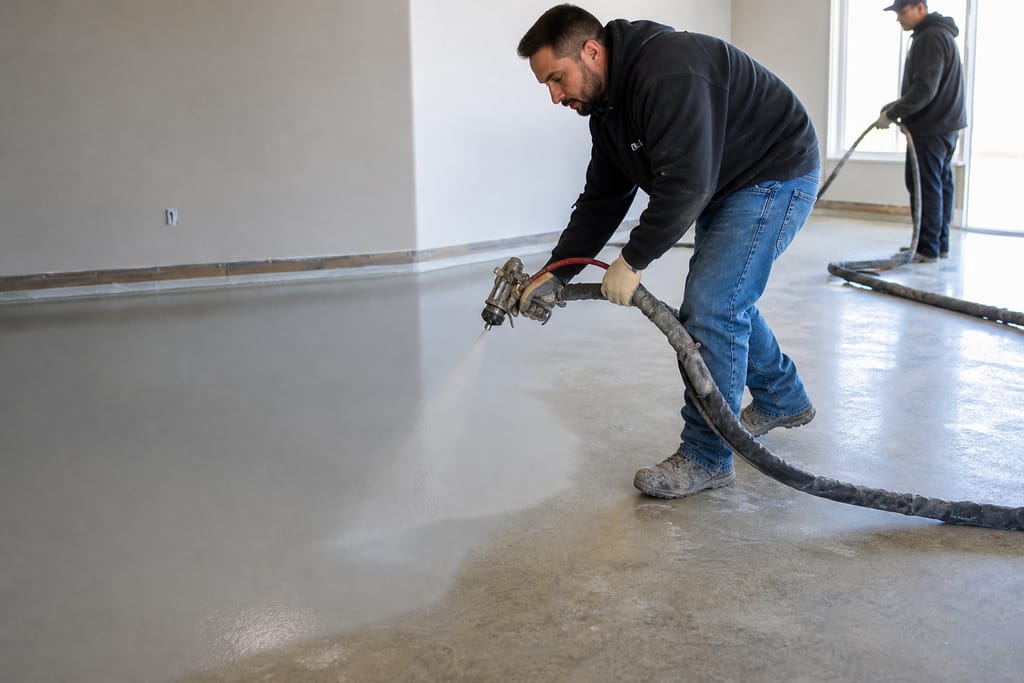
- Spray-Applied Base Layer — A sprayed polyurea base goes down for fast, even coverage.
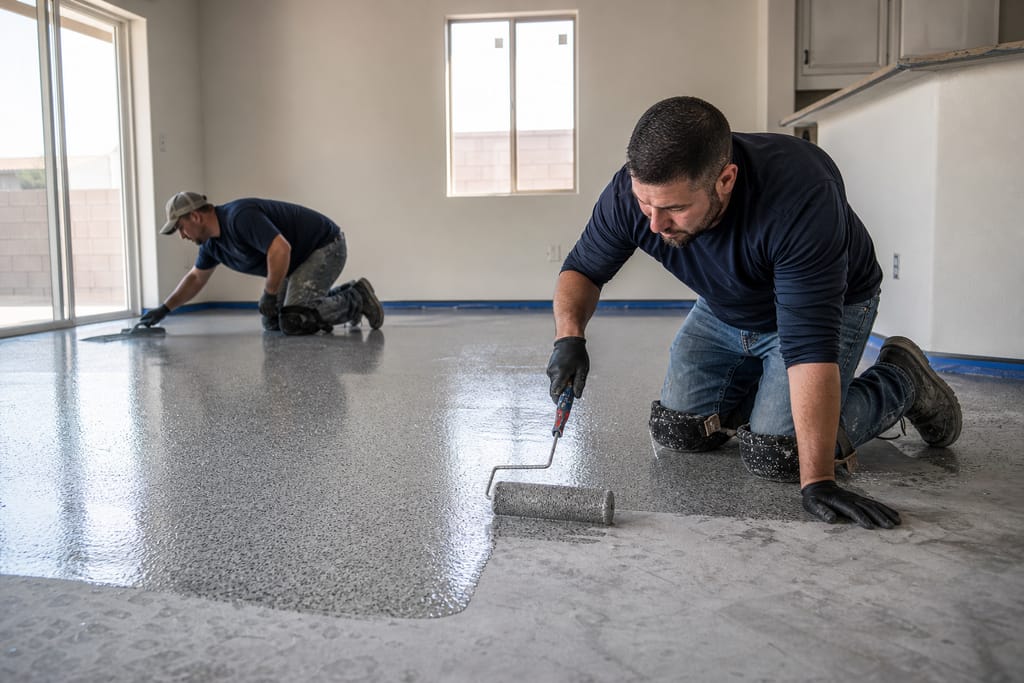
- Reinforcement Layer — High-traffic zones get an added layer for extra durability.
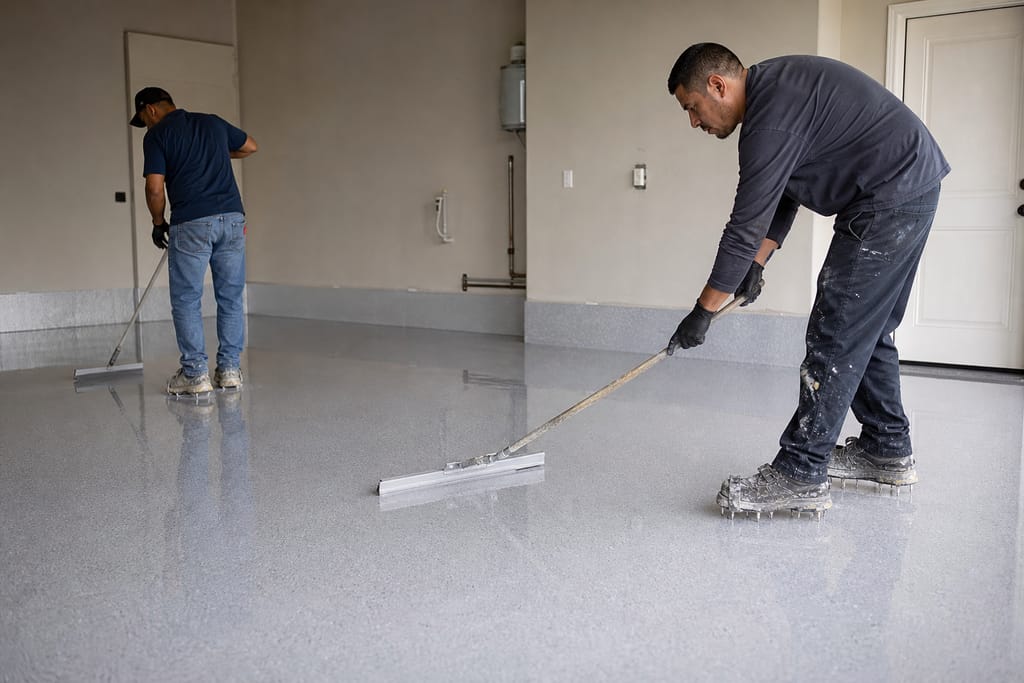
- Fast Final Cure — The coating cures in a short window, cutting downtime.
Questions about this?
Get a Free EstimateMaterials
Materials and Methods for Polyurea Floor Coatings
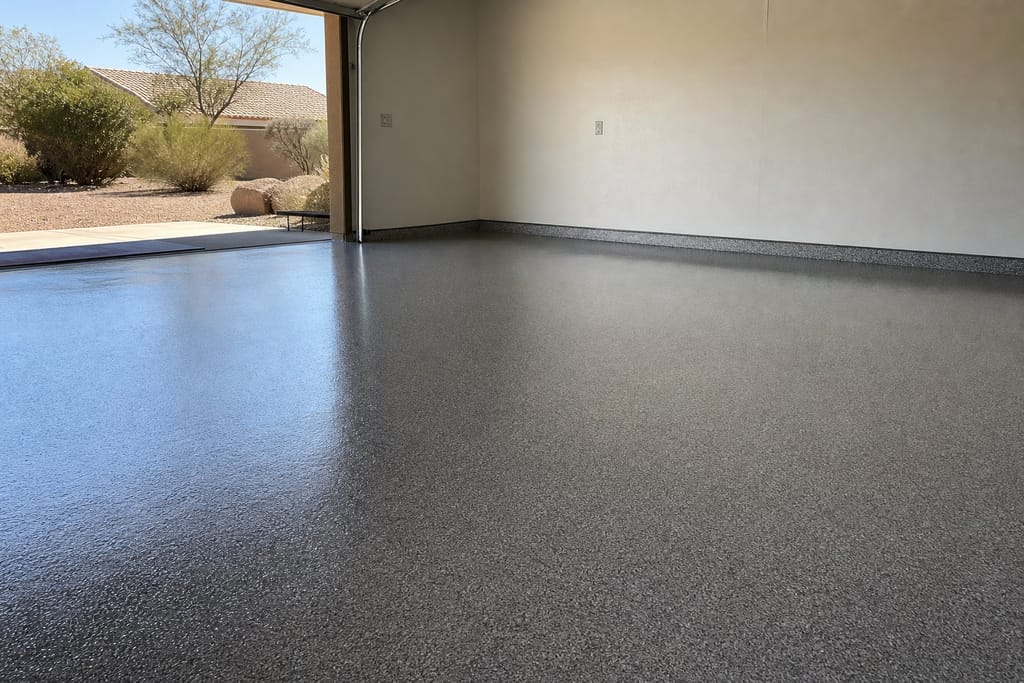
Pure Polyurea Coating
Flexible and fast-curing, it resists cracking on slabs that shift slightly with Prescott Valley's seasonal temperature range.
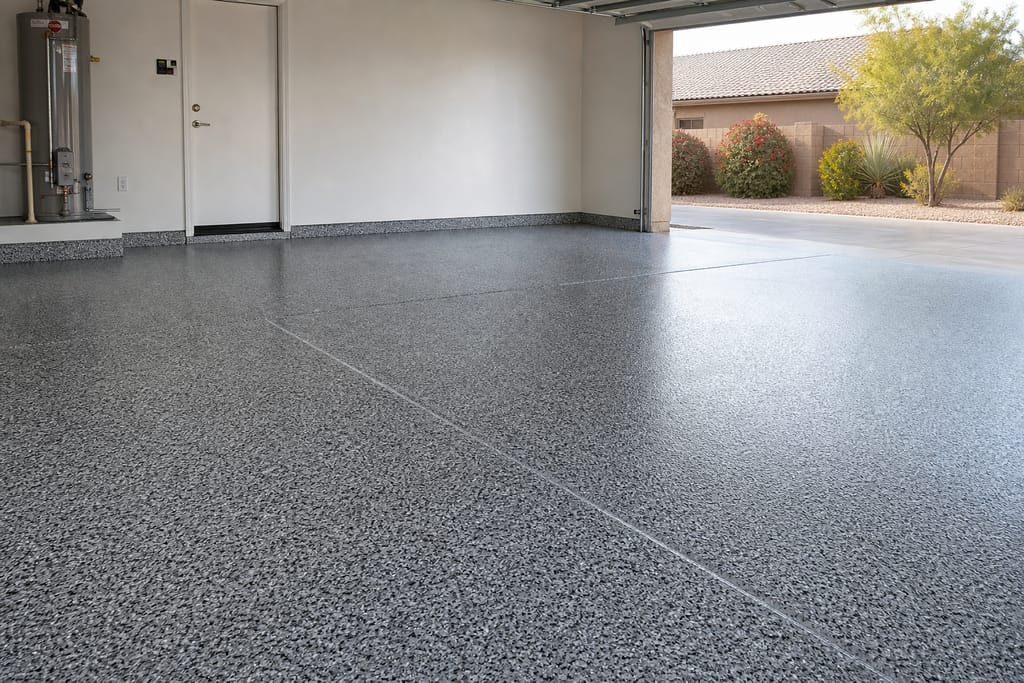
Hybrid Polyurea-Epoxy System
Combines epoxy's hardness with polyurea's speed, a fit for garages needing both strength and quick turnaround.
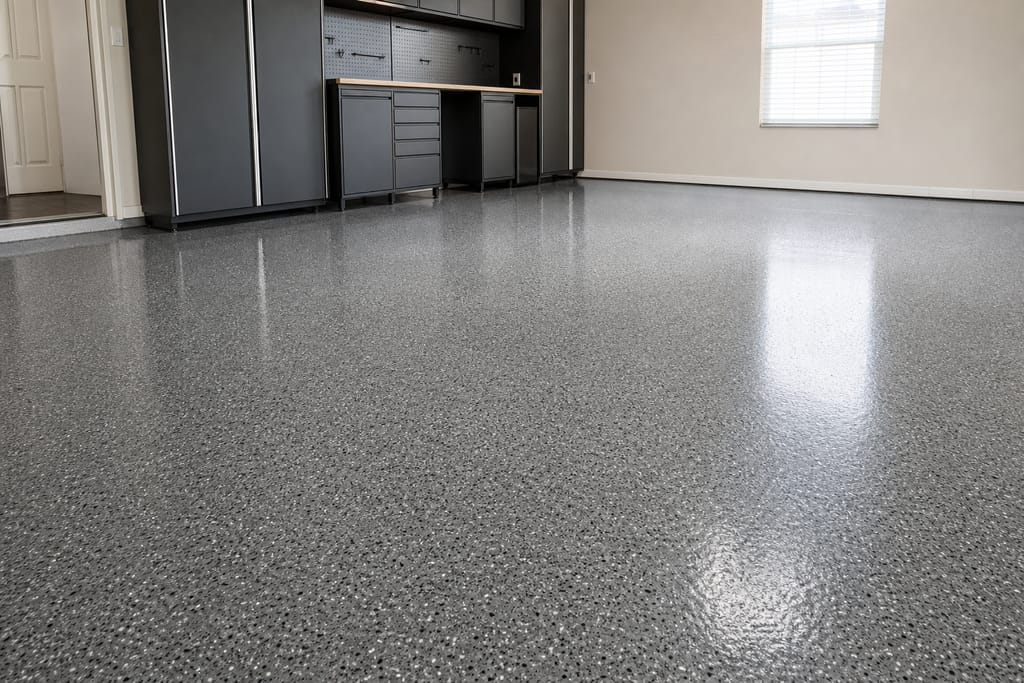
Impact-Resistant Topcoat
Holds up to dropped tools and heavier shop equipment without chipping.
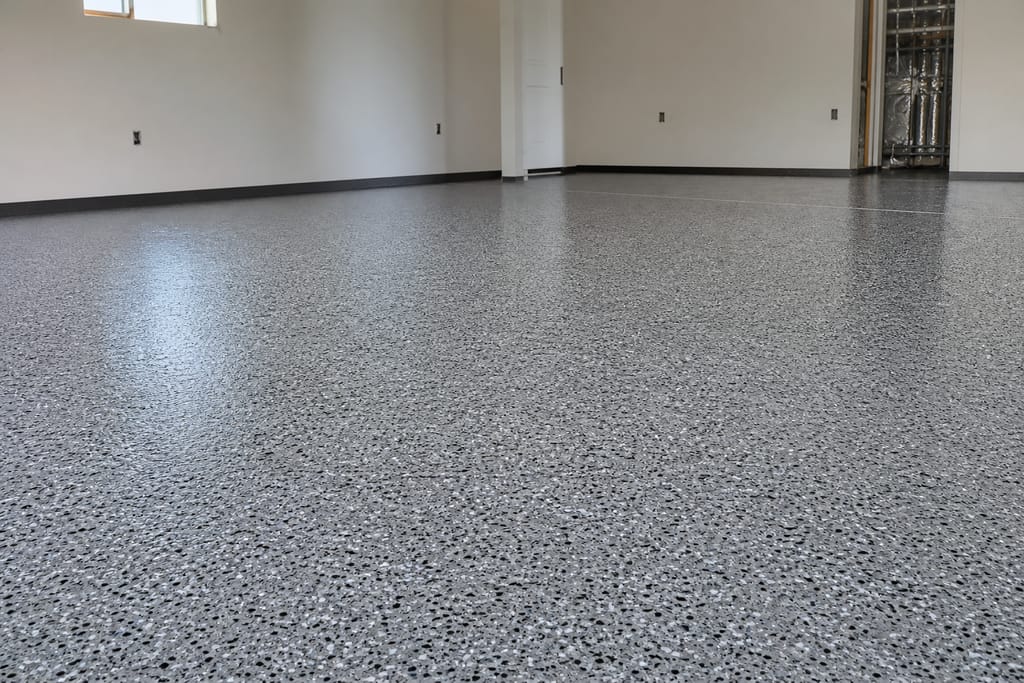
Thermal Shock Resistant Layer
Handles the swing between cold winter mornings and warm afternoons without surface stress cracking.
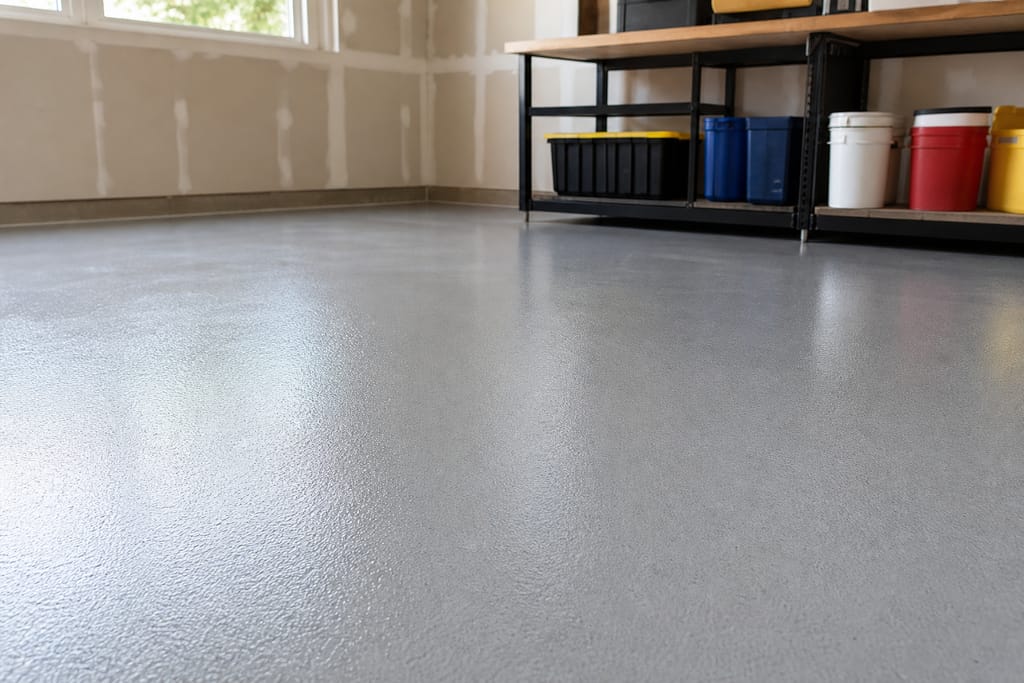
Chemical Barrier Sealant
Resists solvents and fuels common in workshop or garage settings.
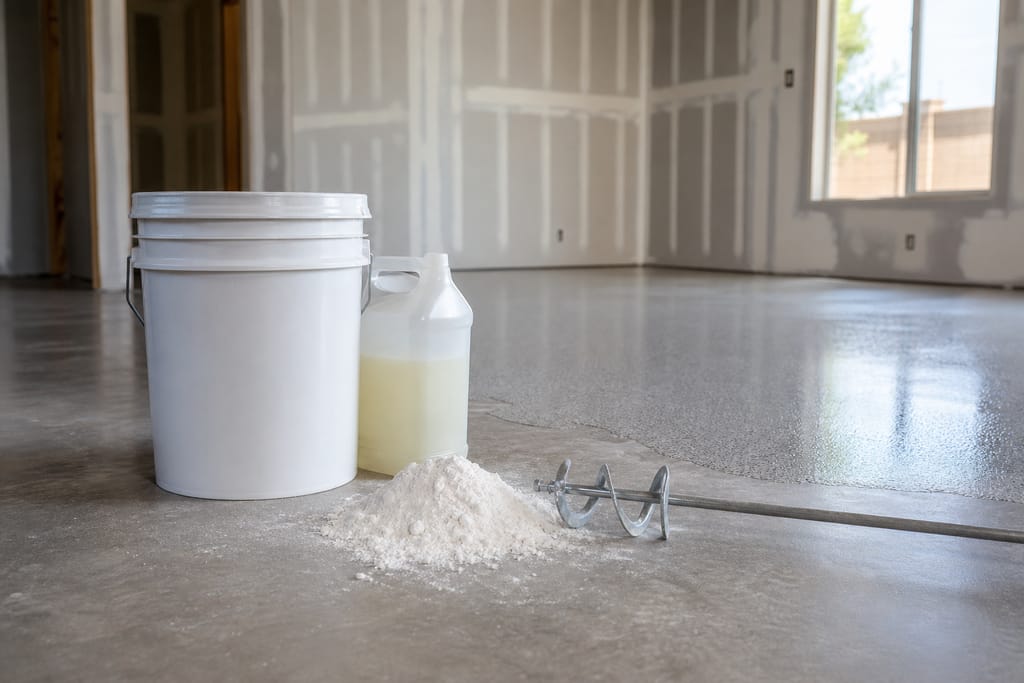
Elastomeric Additive
Adds flexibility so the coating moves with minor slab shifts instead of cracking.
Questions on materials?
Get a Free EstimateTimeline
How Long Does a Polyurea Floor Coating Take?
Polyurea's spray application and fast cure keep the schedule tight.
- 01
Consult and assessment
same day - 02
Grinding and crack repair
1 day - 03
Spray application
1 day - 04
Cure before light use
4–6 hours - 05
Full cure before heavy equipment
24–48 hours
Need a schedule that fits?
Get a Free EstimateFAQs
Polyurea Floor Coating FAQs
What's the difference between epoxy and polyurea coatings?
Epoxy is rigid once cured; polyurea stays flexible and cures faster. Polyurea handles minor slab movement better, while epoxy offers a harder, more rigid surface at a lower cost.
Is polyaspartic better than epoxy for Arizona garages?
Polyaspartic and polyurea are often confused but they're different chemistries. Polyurea offers more flexibility, polyaspartic offers UV stability. They're frequently layered together for the best of both.
Can polyurea be applied over an existing epoxy coating?
In some cases yes, as long as the old coating is properly ground and tested for adhesion first. A failing or peeling coating usually needs full removal before polyurea goes on.
How fast does polyurea cure compared to epoxy?
Polyurea sets within hours rather than days, which is why it's sprayed rather than rolled in most commercial and shop applications.
Does polyurea cost more than standard epoxy?
Typically. The flexibility and spray-application skill required push the price above standard epoxy, though it often saves money long-term on slabs prone to movement.
Before & after
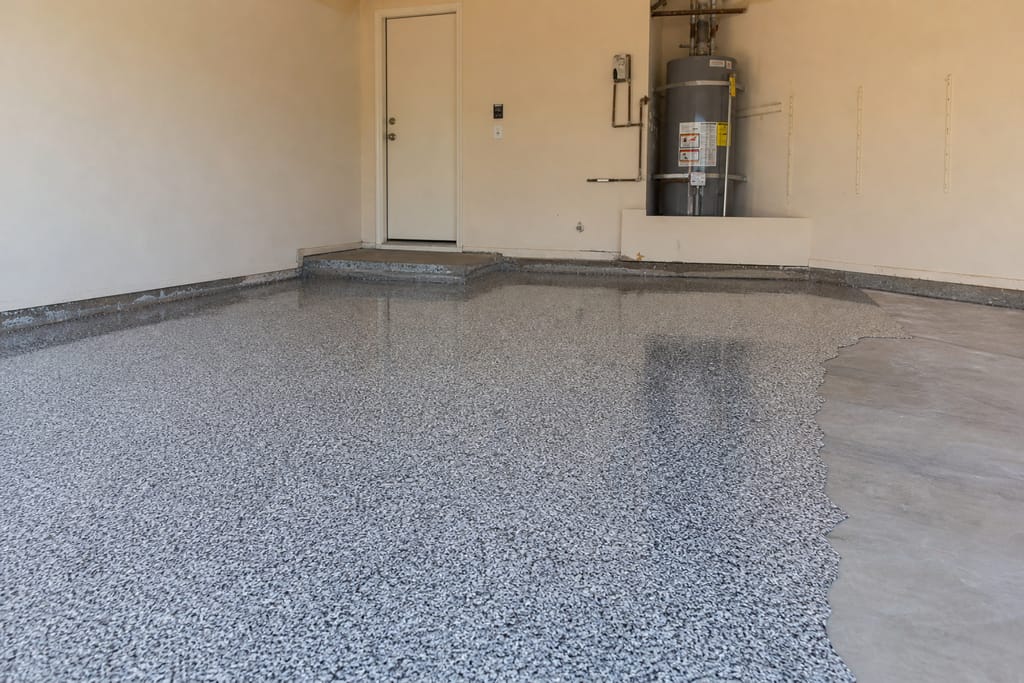
Before and After Polyurea Coatings
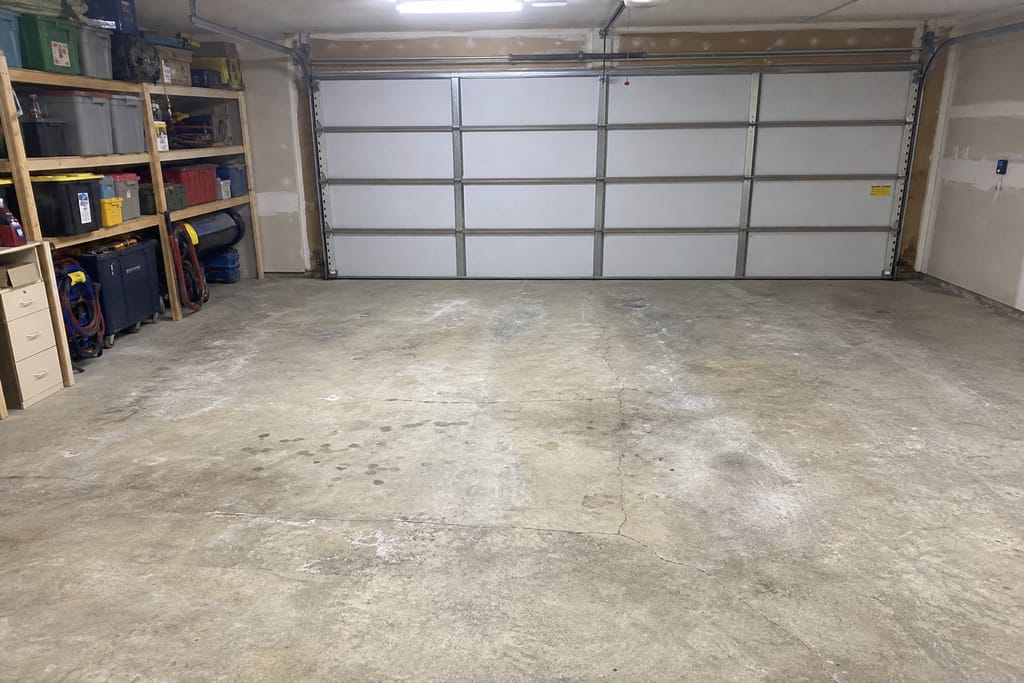
Before 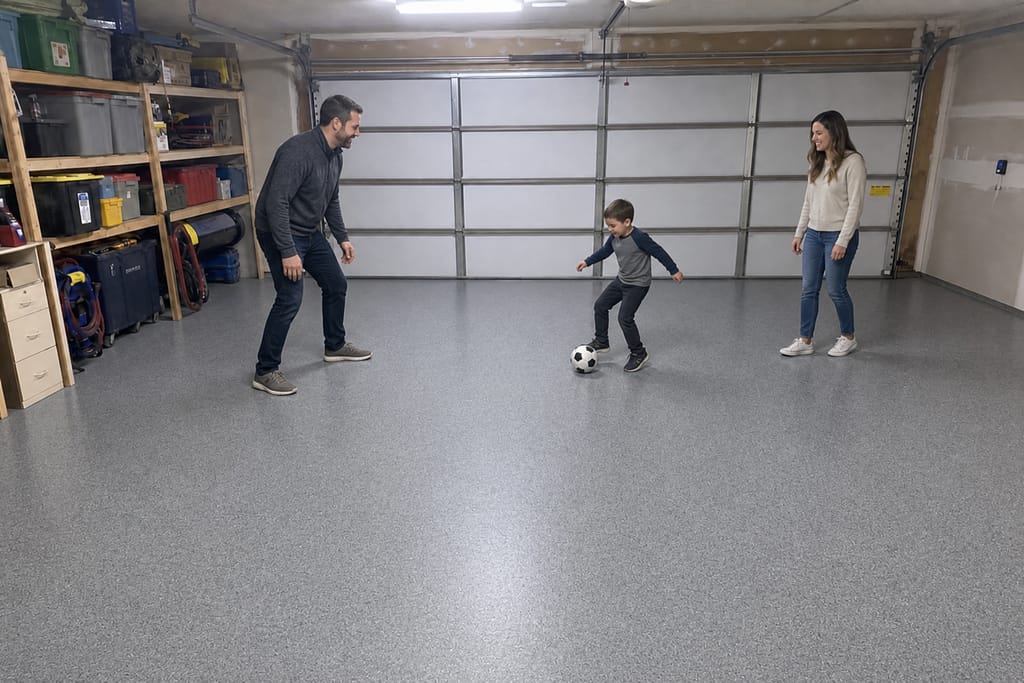
After
Next step
Get a Polyurea Floor Coating Estimate in Prescott Valley
Call Prescott Valley Epoxy Pros for a free estimate if your slab shows movement or needs a flexible coating system. See Home, reach out through Contact, or compare against Polyaspartic Floor Coatings.
How it works
Our process
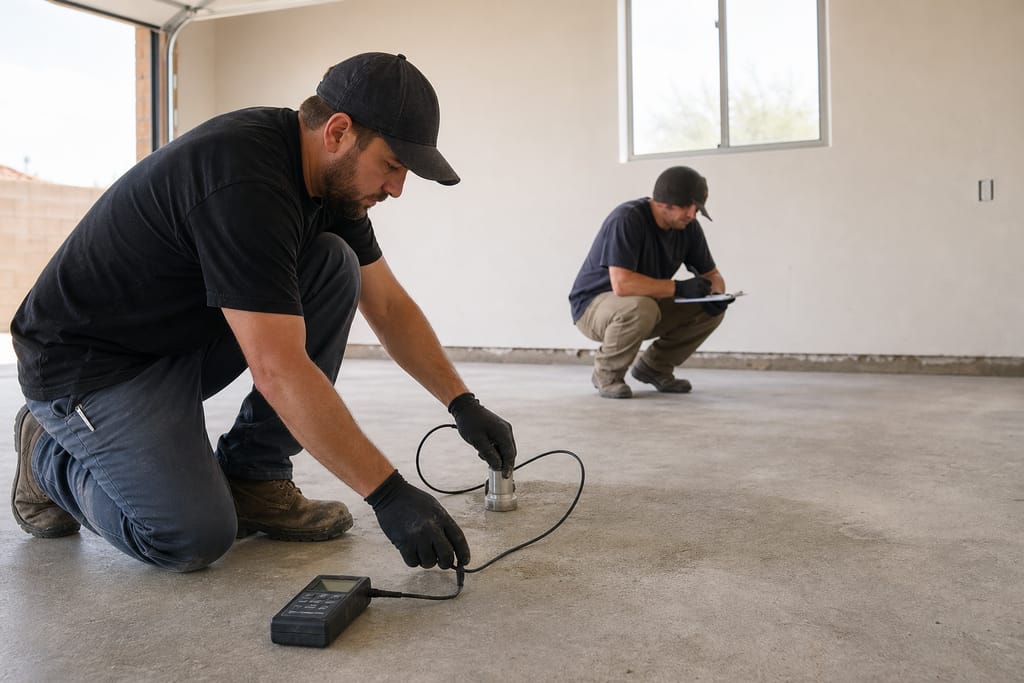 Step 1
Substrate Assessment
The concrete is tested for moisture and strength before coating application.
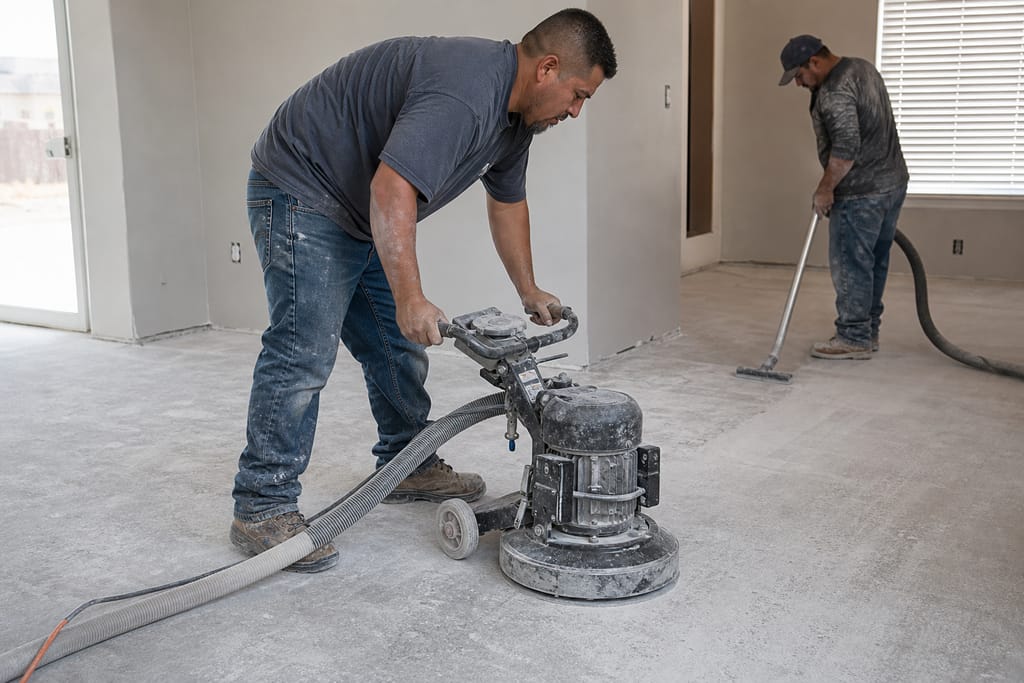 Step 2
Surface Grinding
Mechanical grinding prepares the surface profile for strong material bonding.
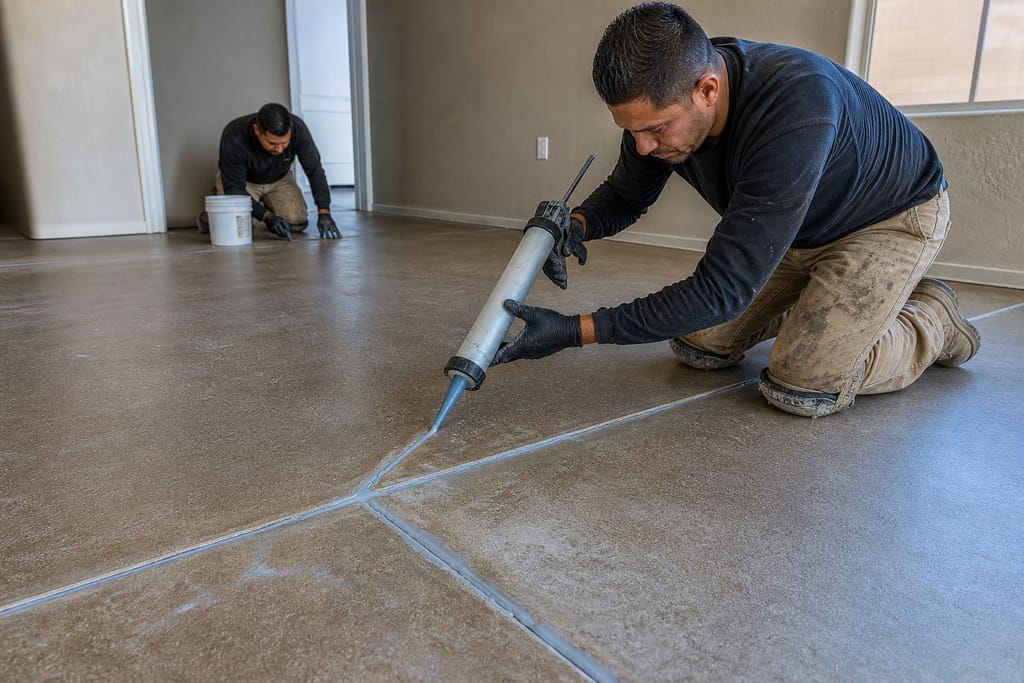 Step 3
Joint & Crack Sealing
Expansion joints and cracks are sealed to prevent coating failure over time.
 Step 4
Spray-Applied Base Layer
A sprayed polyurea base layer is applied for rapid, even coverage.
 Step 5
Reinforcement Layer
An additional layer is added in high-traffic zones for extra durability.
 Step 6
Fast Final Cure
The coating cures within a short window, minimizing facility downtime.
More services
Other Epoxy Flooring services
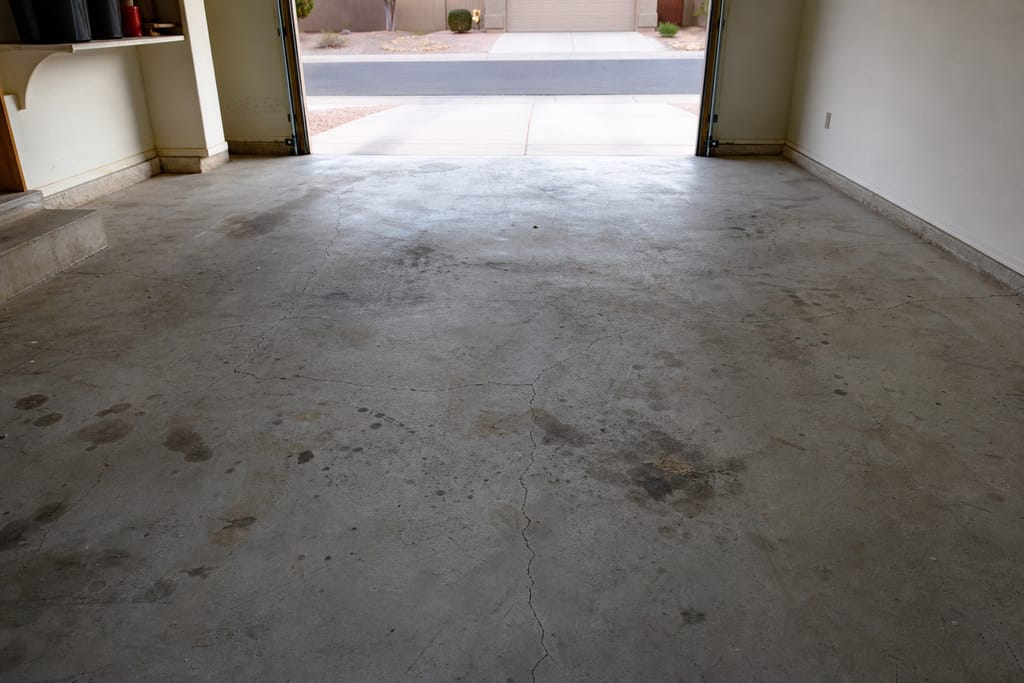
Garage Floor Epoxy Coatings
Garage floor epoxy coatings in Prescott Valley, AZ. Grind, repair, coat, cure. Free estimates on every job.
Epoxy Floor Coatings
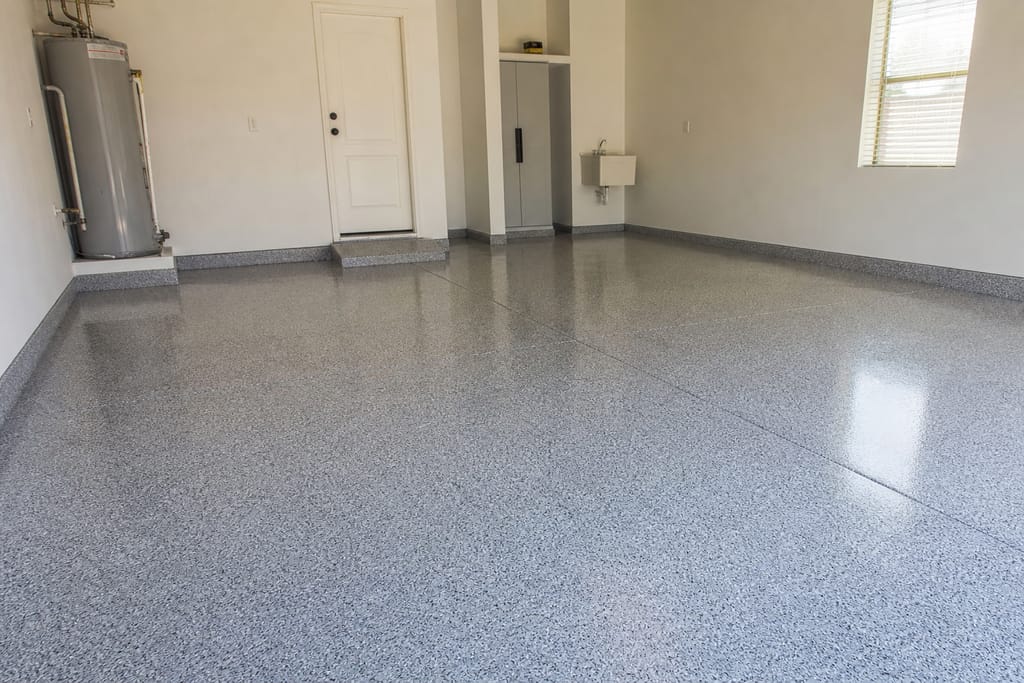
Epoxy floor coatings for garages, basements, and utility floors in Prescott Valley, AZ. Moisture-tested, free estimates.
Polyaspartic Floor Coatings
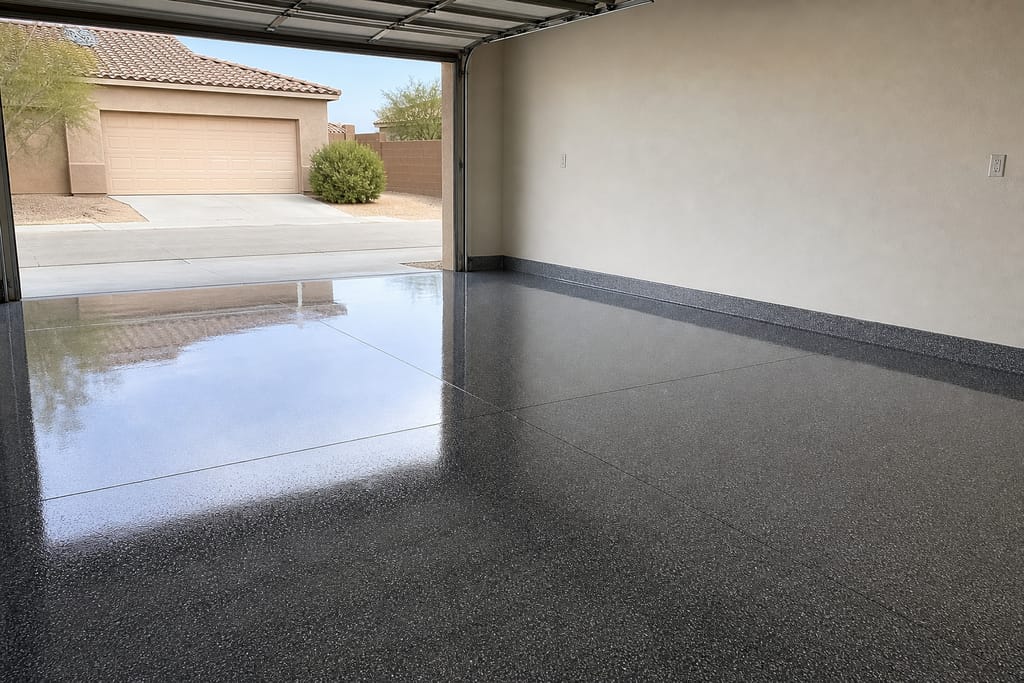
Polyaspartic garage floor coatings in Prescott Valley, AZ. Fast cure, UV-stable topcoats. Free estimates available.
Ask about Polyurea Floor Coatings
Tell us about the project and how to reach you.